

Is AI as Powerful as People Fear—and Should You Be Concerned?
Artificial intelligence can write convincing emails, generate realistic images, analyze documents, and produce computer code in seconds. Those abilities are impressive enough to raise a reasonable question: if AI can already do all this, how worried should we be?
The practical answer is that AI deserves attention, not panic. It creates genuine risks, but its capabilities are often exaggerated or misunderstood. Understanding what it does well, where it fails, and how it affects everyday internet use is more useful than treating it as either a miracle or an unstoppable threat.
What Makes Today’s AI So Powerful?
Modern AI systems learn patterns from large amounts of data. Generative AI uses those patterns to produce text, images, audio, video, or code in response to instructions. Some systems can also search the web, use software tools, and complete multistep tasks.
Their biggest advantage is scale. A person might spend an hour drafting a report or researching a topic; AI can generate a first pass almost immediately. The same speed can help a small business answer routine questions—or help a scammer create hundreds of personalized messages.
However, fluent output is not the same as dependable judgment. An AI assistant can explain one topic accurately, then confidently invent a source or misunderstand a basic requirement. Its performance depends on the model, the task, the information available, and how carefully the result is checked.
Where the Fears Are Justified
Scams and impersonation
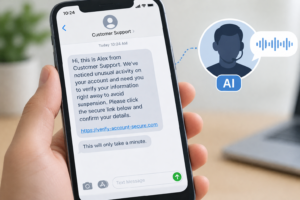
AI makes it easier to produce polished phishing messages, fake customer-support conversations, and synthetic voices. Poor spelling is no longer a reliable warning sign. A convincing message—or even familiar-sounding audio—does not prove who is contacting you.
These attacks still commonly depend on familiar tactics: urgency, fear, secrecy, and requests for money or login credentials. AI improves the disguise, but recognizing the underlying pressure tactics remains valuable.
Misinformation and unreliable answers
Realistic images and confident explanations can spread false claims quickly. Sometimes that is deliberate; sometimes an AI tool simply generates incorrect information. A convincing answer is not evidence that the answer is true.
This matters especially for medical, financial, legal, and safety decisions. AI can help you understand terminology or prepare questions, but consequential claims should be checked against authoritative sources or a qualified professional.
Privacy and security
Information entered into an AI service may be stored or processed under that provider’s policies. Data handling varies by product, account type, and settings. Uploading a confidential document should therefore be a deliberate decision, not a casual shortcut.
AI systems connected to email, files, or business software also introduce additional risks. Mistaken actions, excessive permissions, or malicious instructions hidden in content can cause problems. The more access a system has, the more important safeguards and human approval become.
Changes to work and creative industries
AI can automate parts of writing, customer support, design, programming, and administrative work. That does not mean every affected job will disappear, but it can change hiring, workloads, pay, and expectations. The effects will vary across industries, and disruption can be significant even when whole occupations remain.
What About AI Taking Over?
Claims about future AI range from broad prosperity to catastrophic loss of control. These possibilities should not be confused with established facts about current systems. There is substantial uncertainty about how quickly capabilities will advance and whether future safeguards will be adequate.
Current AI can be highly capable without being reliable across every situation. It does not need human-like intentions to cause harm: an automated system making consequential mistakes at scale is already a serious concern. Longer-term risks deserve research and oversight, but dramatic predictions are not a useful substitute for evidence.
How to Protect Yourself Without Avoiding AI
- Verify unusual requests independently. Contact the person or organization through a known number or official app—not the details supplied in the message.
- Protect your accounts. Use unique passwords, a password manager, and multifactor authentication or passkeys where available.
- Limit sensitive uploads. Check privacy settings and policies before sharing personal, financial, or confidential information.
- Check important answers. Read the underlying sources and confirm that they support the claim.
- Keep control of consequential actions. Review payments, published content, code, and account changes before approving them.
Concern Is Useful When It Leads to Better Habits
AI is powerful enough to change how we work and how online deception operates, but it is not all-knowing or infallible. Use it where speed and assistance help, question it where accuracy matters, and give it only the access it needs. That is a more effective response than either blind trust or constant fear.